AMDE 477 / Campaign Case Study
TikTok Storytelling: Hook, Payoff, Action
A practical lesson in structuring short-form video so the opening earns attention, the middle delivers value, and the ending gives viewers a next step.
This case study is a little different from the others. Rather than analyze one brand’s campaign, we’ll use TikTok for Business’s published storytelling framework to examine how a short video can move from attention to understanding to action.
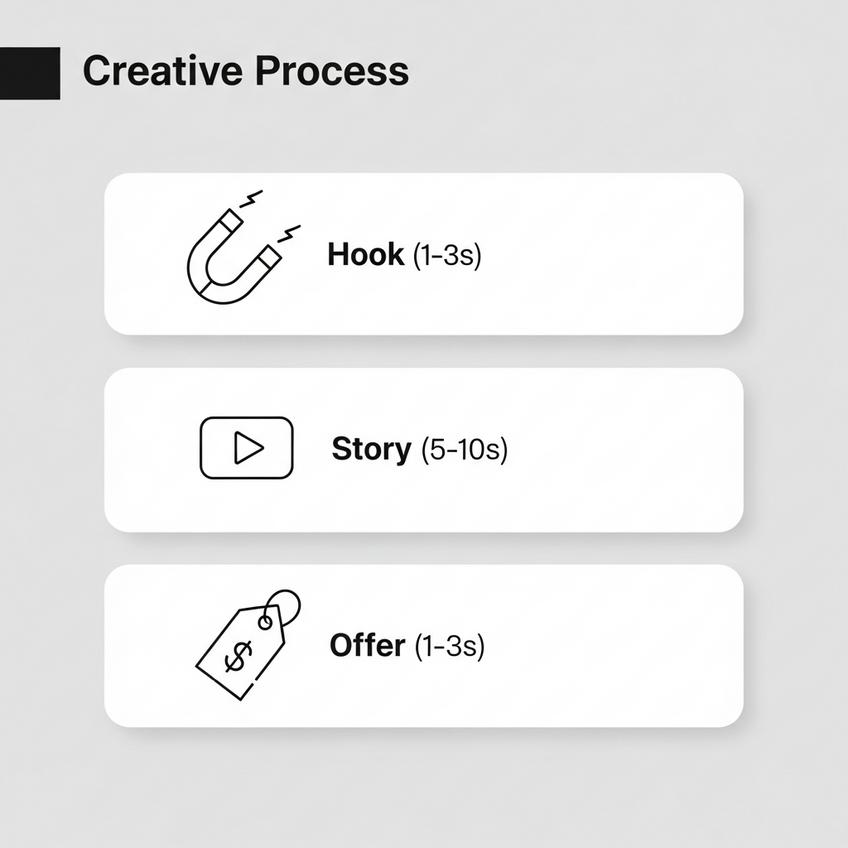
1 / The three-part structure
Beginning / Hook
Open with a question, problem, surprising visual, or result that is relevant to the audience. Avoid a long introduction before the point becomes clear.
Middle / Payoff
Deliver what the hook promised. Demonstrate the product or service, explain a benefit, show the steps, or provide evidence.
End / Call to action
Tell viewers what to do next: learn more, visit a page, register, explore a product, or take another action that fits the objective.
TikTok’s small-business video guidance also describes structures such as Problem → Solution → Benefit and Tease → Reveal → CTA. These are planning tools, not rigid rules; the right structure depends on the campaign.
2 / Work through an example
Hook (first few seconds): Show a lump of clay and ask, “Could you make your first cup in one workshop?”
Payoff: Show a few real steps: centering clay, shaping the wall, and a finished example. Add captions that explain what the instructor helps beginners learn.
CTA: Show the actual workshop date and a clear route to the registration details.
Important: Do not promise that every participant will produce an identical result. Show an accurate representation of the experience.
3 / Make the hook relevant
A hook should create interest without misleading the viewer. Consider these options:
- Question: “Never tried pottery? Here’s what your first class looks like.”
- Problem: “Not sure what to bring to a beginner workshop? Here are the basics.”
- Reveal: Start with the finished object, then show how it was made.
- Demonstration: Begin with a satisfying or surprising action that is directly connected to the offer.
Choose the hook that best matches the audience’s question or motivation. Avoid clickbait that promises a reveal the video never delivers.
4 / Plan a short storyboard
Shot 1 — Attention
Show the most relevant visual first. Add a short on-screen line that states the problem, question, or result.
Shot 2 — Process
Show the action or steps. Keep the framing and pacing clear enough for a viewer to follow.
Shot 3 — Benefit
Show what the audience learns, gains, sees, or can do. Use only accurate claims.
Shot 4 — Next step
Display a concise CTA and relevant details. Ensure the destination or instructions are easy to find.
5 / Adapt the same story across platforms
A TikTok-style story can inspire the campaign, but the final execution should fit each platform. Use the short vertical video on TikTok; consider a Reel or carousel on Instagram; make a Facebook version that includes more practical event or service details; and create a concise X post that highlights the key benefit and directs people to further information.
Keep the campaign’s main message and offer consistent, but do not assume every platform needs the exact same edit or caption.
6 / Accessibility and production checks
- Add captions or subtitles so viewers can follow the message without sound.
- Keep on-screen text readable on a phone and avoid placing key information where platform controls may cover it.
- Make the video understandable without relying on color alone.
- Use music and footage you have permission to use.
- Check that the CTA and destination page match.
- Review the opening: can someone understand why they should keep watching within the first few seconds?
7 / Measure what matters
For a video designed to hold attention, look at watch time or completion signals where available. For a campaign intended to generate action, also examine link clicks, registrations, purchases, inquiries, or visits to the relevant page. Views alone cannot tell you whether the campaign achieved its objective.
Discuss and apply
- What promise does the hook make?
- Does the middle deliver the promised information or experience?
- Is the CTA a logical next step, or does it feel unrelated?
- What should change if the video gets views but few people act?
Mini activity
Storyboard a 15–25 second video for your own brand. Write the hook, list the shots, write any on-screen text, and finish with one CTA. Then identify one measure that matches the goal of the video.
Explore the sources
- TikTok for Business: video advertising guide and storytelling frameworks
- TikTok for Business: storytelling formats worksheet for small businesses (PDF)
- TikTok for Business: six storytelling frameworks
Source note: The structure and planning suggestions are summarized from TikTok for Business resources. The pottery workshop example is fictional and was created for class.
Apply it to your campaign
Use the questions and activity in this post to analyze the strategy—not just whether you personally like the creative. Your own campaign should fit your brand, audience, offer, and objective. Follow the current D2L assignment for required deliverables and due dates.