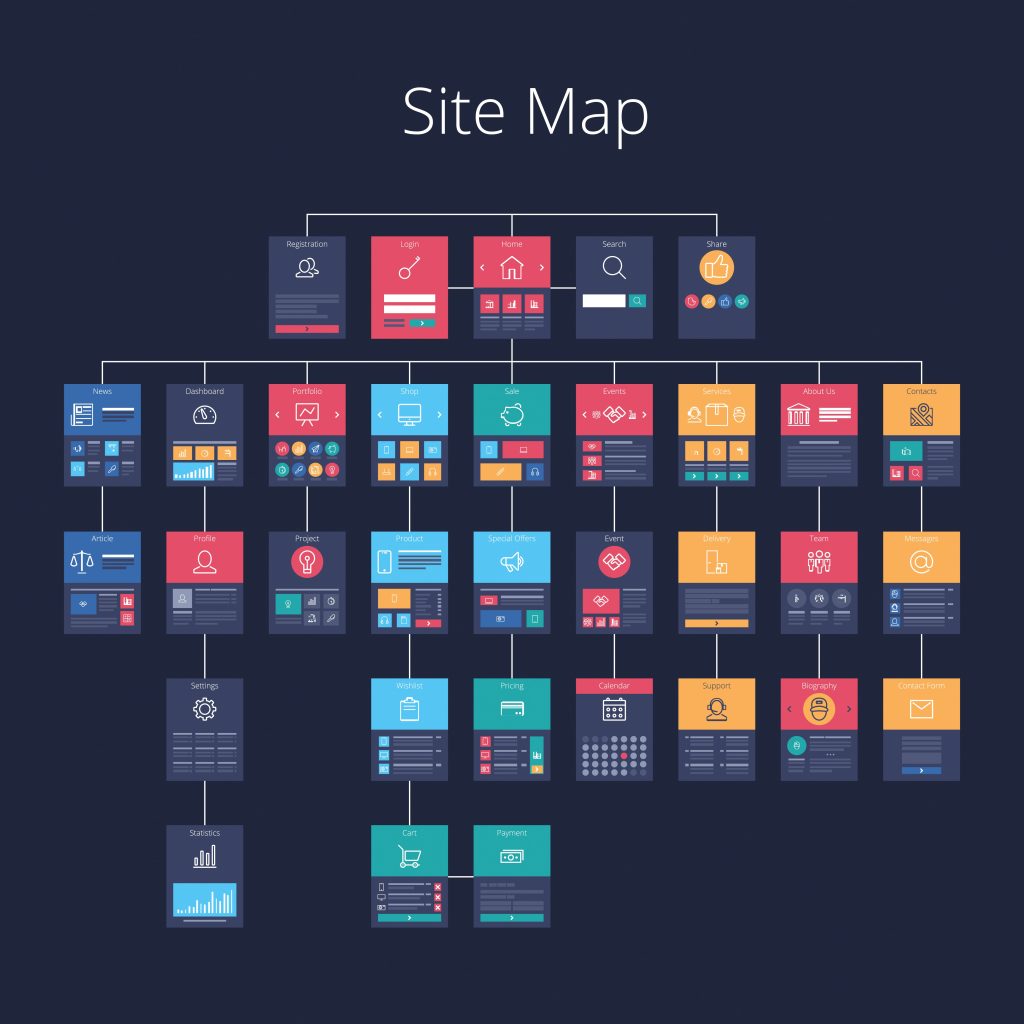
Flat Site Structure
Before answering the question, it’s important to understand a flat site. A flat site is organized in a way that every page on the site can be reached from the home page, which contains a sitemap with links to every page on the site. While this used to be a relatively common way to organize and traverse websites, site organization has come a long way in the last couple of decades, and Google’s algorithms have become more sophisticated and better at recognizing complex, and contextual, site structures.
Theme Pyramid Structure
Today, the new standard for site organization is a concept called theme pyramids. The idea behind a theme pyramid is that you have major categories on your homepage, which then lead you to more specific pages as you click through pages. Your major categories are designed around the keywords you want to rank for, such as roofing and siding for contractors, and then from there, you can get more specific with your subcategories, such as metal and asphalt roofing. This site structure makes sense from an organizational standpoint, as it allows both users and Google to crawl through your website and understand how one page is related to another, rather than just throwing all of the links into a sitemap with no organization method.
Mueller’s Advice
John Mueller advised the user that the best way to organize the site is with a theme pyramid-esque structure where one category leads into a number of subcategories. Structure your site in a way that both users and Google can understand how one category relates to the subcategories it’s linked to. If your website structure makes sense to users, it will make sense to Google. He advised users to worry more about whether users easily navigate their website. Essentially, if your users can understand how your website is structured and easily navigate it, then Google will certainly be able to as well.